The Feral Blog

America’s Veterinarian Shortage + Cat News You’ll Actually Want to Read

National Veterinarian Shortage in the U.S.

The United States is facing a widespread veterinarian shortage that is affecting both pet owners and agricultural producers, with impacts expected to persist through the early 2030s.

Scale and Projections

  • The American Veterinary Medical Association (AVMA) estimates the U.S. needs about 7,300 new veterinarians per year to replace retirees and meet demand, but schools are producing closer to 6,000 annually, creating a cumulative shortfall of roughly 14,600 veterinarians by 2030.
  • Some industry reports suggest the gap could be as high as 55,000 additional vets by 2030 to meet companion animal demand alone.
  • By 2030, the U.S. will need 10,000 more veterinarians just to meet demand, with 25,000 job postings in a single quarter in 2023.

Where It’s Hardest

  • Rural areas and food animal medicine are hit hardest, with many counties lacking a single vet or emergency clinic.
  • Emergency and specialty care is overburdened, leading to long wait times and temporary closures.
  • The USDA’s 2026 shortage map lists over 40 counties across multiple states as designated shortage areas.

Causes

  • Aging workforce: Many vets are nearing retirement, especially in large animal medicine.
  • Shift to corporate practices: Fewer small, independently owned clinics, making it harder to pass on low-cost practices.
  • High training costs: Veterinary school tuition has risen sharply, making entry harder.
  • Specialty shortages: Open positions for specialists exceed available candidates by up to four times.

Impacts

  • Pet owners: Longer wait times (48 hours vs. 12 in urban areas), higher emergency care costs (15–17% more), and clinic closures.
  • Agriculture: U.S. dairy farms lost $3.2B in 2022 due to delayed care; rural farm incomes drop 5–10%.
  • Public health: Delayed diagnosis increases zoonotic disease transmission risk by 32%.
  • Economic loss: Estimated $1.2B annually in lost productivity.

Solutions and Outlook

  • More veterinary schools: 20 new schools needed by 2030 to meet demand.
  • Incentives: USDA and VMLRP programs target vets to shortage areas.
  • Affordable care: Organizations like the Maryland SPCA and Baltimore Humane Society are stepping in to fill gaps.
  • Workforce retention: Addressing burnout and improving compensation to keep vets in the field.

In short, the U.S. veterinary shortage is a systemic, long-term issue driven by supply constraints, demand growth, and structural changes in the profession. Without significant expansion of training capacity and targeted recruitment, the gap will continue to widen.

Cat Butt Imprint Study — What It Was and What It Found

A viral “cat butt imprint study” was actually a science fair project conducted by 6th grader Kaeden Henry and his mother, Kerry Hyde, in 2021 to answer a common cat owner question: Do cat buttholes touch every surface they sit on? Upworthy.

How the Study Was Conducted

Hypothesis: Cats’ buttholes do not always make contact with every surface they sit on.

Method:

  1. Non-toxic lipstick was applied to the anuses of each cat.
  2. Cats were trained to follow commands (sit, lie down, jump up) and sit on a variety of surfaces — soft (pillows, couches) and hard (wooden tables, tile floors).
  3. After each sitting, the lipstick was wiped away with a baby wipe.
  4. The experiment lasted under 10 minutes per cat.

Participants: Long-haired, short-haired, and medium-haired cats (hairless cats were excluded due to potential contact with wipes).

Results

  • Long-haired and medium-haired cats: Their buttholes did not make contact with either soft or hard surfaces.
  • Short-haired cats: Their buttholes did not make contact with hard surfaces, but the study did not specify soft surfaces for them.
  • Conclusion: Cat buttholes do not touch every surface cats sit on — contact depends on the cat’s coat type and the surface’s texture.

Why It’s Not a “Real” Scientific Study

While the experiment followed the scientific method, it was not peer-reviewed and was presented as a fun, educational project rather than a formal research paper. It was designed to entertain and answer a quirky but relatable question for cat owners.

Takeaway

If you’re worried about cat butts touching your furniture or bedding, the study suggests that coat length and surface type matter. Long-haired cats are less likely to leave a visible mark, while short-haired cats may still leave marks on hard surfaces. For hygiene, regular cleaning of cat resting areas is still recommended.

Cats Came from the Desert but They Need Water!

Providing water for ferals can increase their quality of life so much! If you feed canned food, stir water into the food and it will make a huge difference. Be sure to clean outside water bowls frequently – even daily as a biofilm scum can form easily and do more harm than good!

Why Does My Cat’s Water Bowl Get Slimy? 3 Vet-Approved Reasons

How Much Water Does a Cat Need per Day?

286 Now Compared To 288 At the End of June 2025!

Our next s/n is 6/25!

  • 6/8 – DCAS – 1 feral male, injured rear foot and mats on his back. Very talkative. Under review at DCAS and may be adopted thru them. We’ll put him under feral, but…
  • 6/11 – DCAS – 13 friendlies, 19 ferals, 18 female, 14 male. Of those 13 friendlies, we have a lot of approved adoptions applications on hand. While we are working on having adoption events, we don’t seem to be keeping kittens in stock!

June total 33, 2026 total 286, 16,831 since 2007!
Picture name
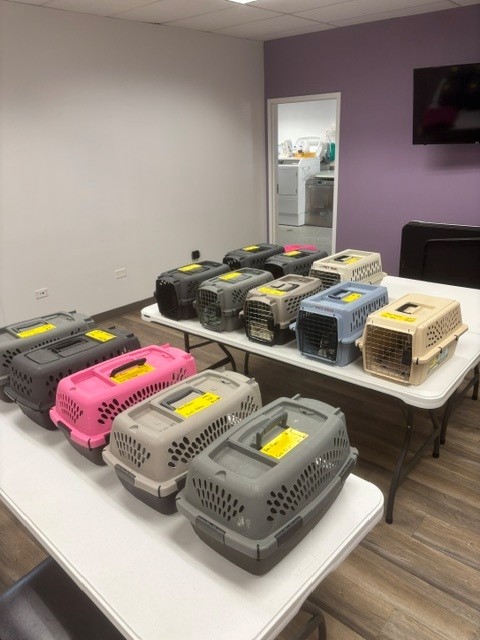
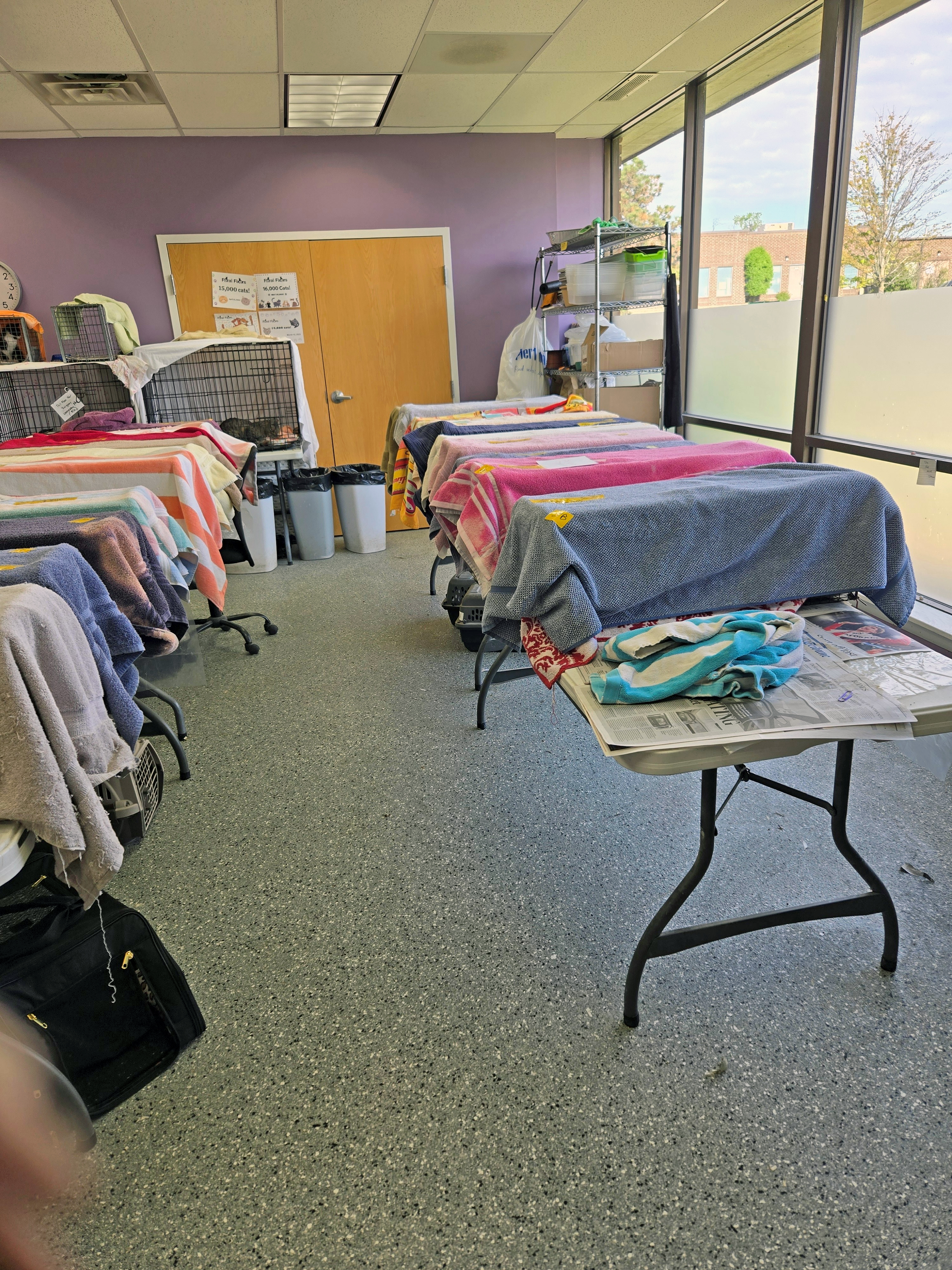
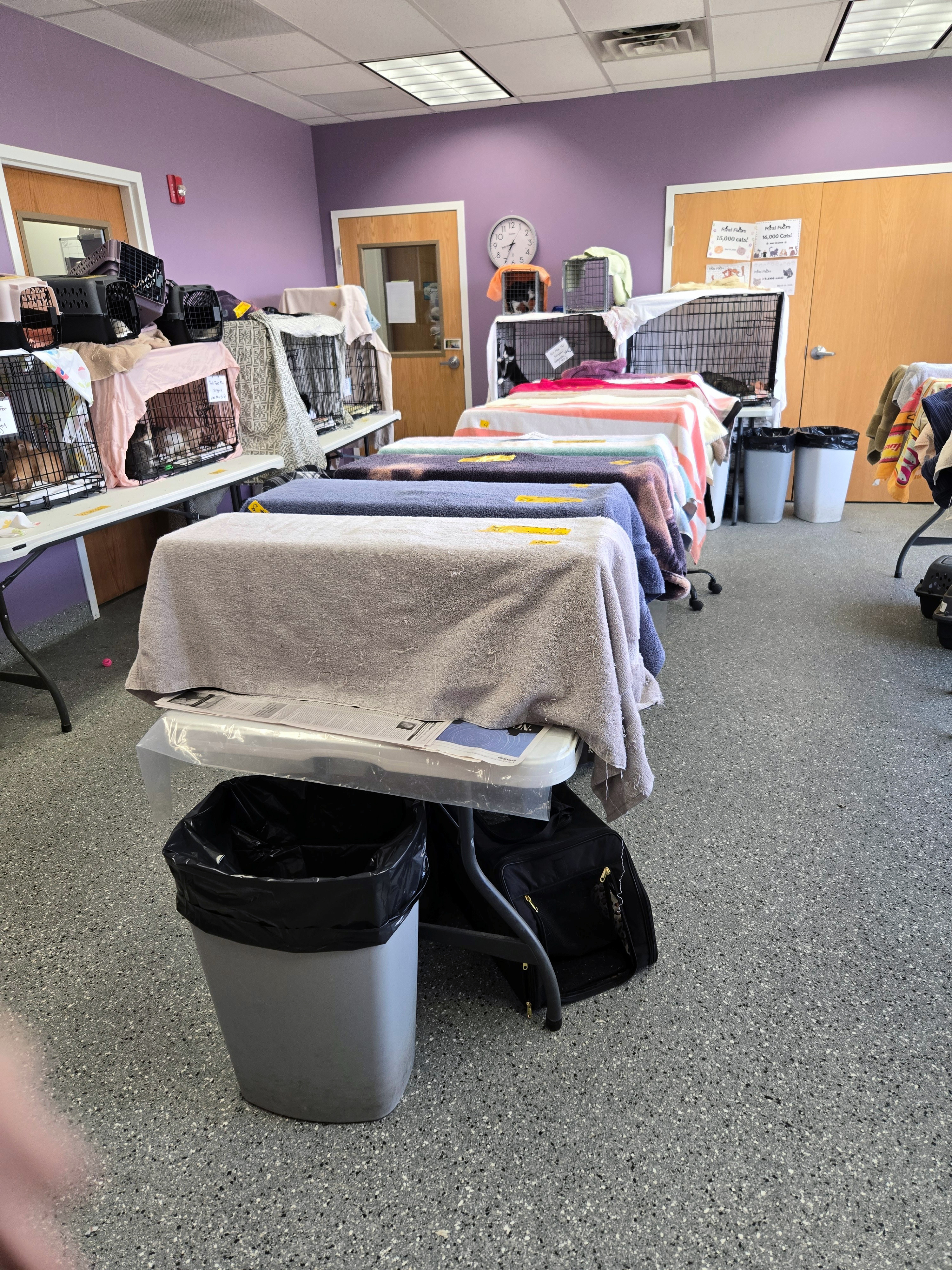
Not enough room in TNR for carriers in addition to the traps so when done with surgery, the cats wait in the big room for pickup by fosters. We have many approved adoption applications on hand but it always helps to fill one out well in advance! In the mix is the lovely girl, Raggedy Ann, currently staying in Cats In Transition, who needs a special foster - she needs to be an only kitty - not sure what happened before she came to us, but other cats are not to be tolerated!

As Many As Possible As Soon As Possible
Kitten “Season” Surges, TNR Wins & Partner of the Year: Feral Fixers May 2026 Update

Kitten “Season”

After all these years, there is no real “Kitten Season”, there are surges about 3 times a year. Last week the kittens were coming in batches of 11! Very productive moms out there!

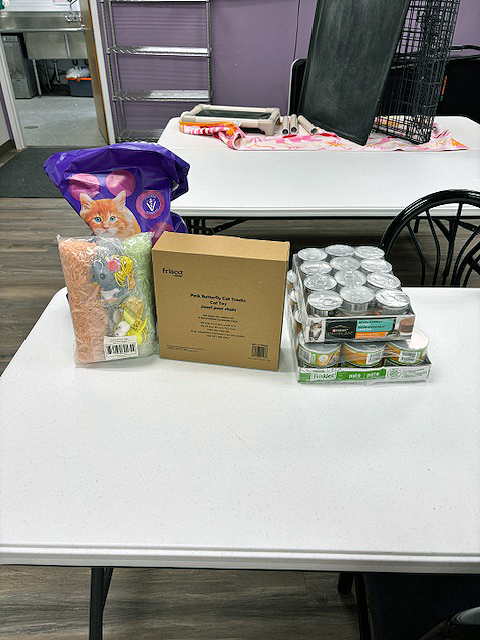
This resulted in an additional plea on Facebook for kitten food – that plea resulted in 17 cases of Fancy Feast canned kitten food, 5 24 packs of Fancy Feast kitten canned, 16 bags of Iams kitten dry, 3 cases of adult pate, 1 case of Buffalo Wilderness kitten and a very cool scratcher! A kitten in our care receives 2 cans of Fancy Feast and whatever dry they will chomp on throughout the day. We are so grateful for the food donations and the monetary donations that keep these kittens well fed and healthy. Amazing that this is just the start of the year, please keep those donations coming!

We are trying to trap as many cats as we have slots for – time to ask for newspapers again! We have a donation bin at the front of our building – please place in paper grocery bags if you can, it can get really windy and we don’t want to spread them around the neighborhood!

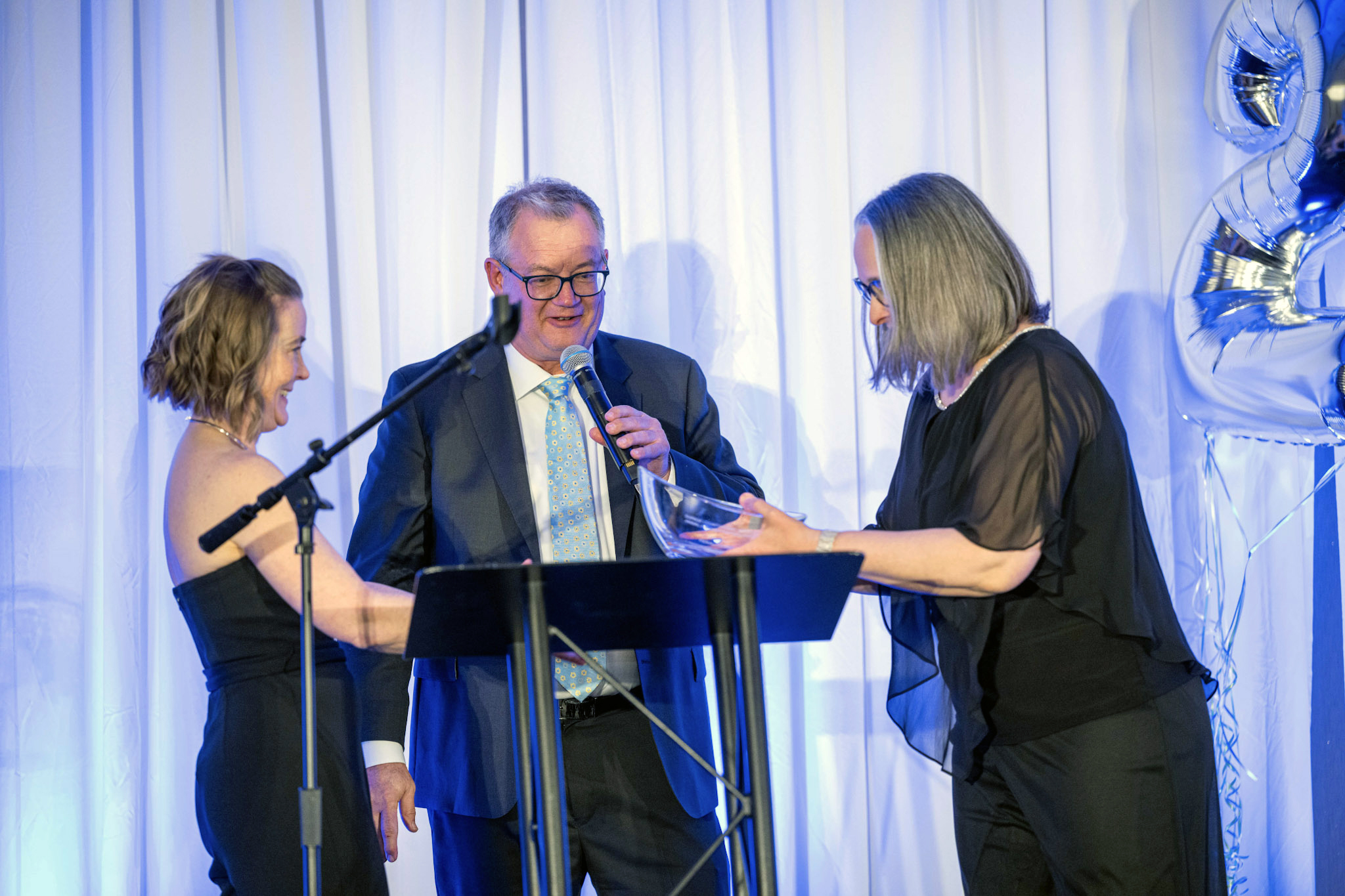
Feral Fixers Named 2026 Animal Welfare Partner of the Year

On May 15th, DuPage Animal Friends named Feral Fixers their 2026 Animal Partner of the Year! What a difference compared to when TNR first began, and it was a struggle for acceptance that TNR was one of the best tools to reducing overpopulation and euthanasia! We are so grateful that we can now work together for the benefit of the cats! I put together a short video for the award which you can view here, and you can view a photo album of the event here.

Mary Schamber
Mary & Francie Schamber
Vice President Mary Schamber and volunteer Francie Schamber were kind enough to represent Feral Fixers at the Furever Friends Gala, receiving our award from Laura Flamion, DCAS operations manager and Brian Krajewski, director DuPage Animal Friends.

Another Reason for Spay/Neuter - TNR

Not that you really need another reason but finding out that rodenticides can impact newborn kittens in this way is a real eye opener. This study of found kittens and their toxicology reports – we often intake kittens that ultimately do not do well and have no idea why they fail. So glad this study was done. Low levels of poison do not kill immediately and not always the animal that eats the poison directly but to find that it affects kittens born later and weeks into their new lives…very disturbing. Not all the kittens in the study died but required huge amounts of supportive care. The study was funded by the Orphan Kitten

How Many Times Do You Buy New Food?

Study has found that cats can have a 5-day limit on interest in a food flavor/brand. Simply introducing the scent of a different food can restimulate interest in first food. So many cat parents constantly change their cat food as intake slows dramatically and repeatedly. Who knew? Hesitate to share this as Feral Fixers is the recipient of donated food that “my cat loved this food and now won’t eat it”!

TNR Working - Colony Numbers Stabilizing

Studies are showing colony volumes are stabilizing and, in many cases, dwindling. Yay!!!

Spread Of Hantavirus Thru Pets Highly Unlikely

Concern over the spread of viruses via our pets is new, this article explains that the new Hantavirus has very low rate of infection between humans and as a result an even lower incidence between pets and people. Something to think about but doesn’t seem to be a big worry at this time!

253 Already So Far This Year!

We will be off the week of 6/4 and 6/18. Can’t wait to see how many we achieve this coming week!

  • 5/14 – DCAS – 5 friendly, 14 feral, 2 already chipped, 12 male, 7 female. DCAS performed an entropion surgery on one of the ferals, he looks so much better!
  • 5/21 – DCAS – 1 feral male – nope he was not pregnant!
  • 5/26 – DCAS – 1 male feral with a severe facial wound.
  • 5/28 – DCAS – 3 friendly, 21 feral, 12 female, 12 male. 

May total 70, 2026 total 253, 16,798 since 2007!

Cats for 05 28 26 - this room is constantly changing!  New kittens, cats awaiting surgery, so much!

11 Kittens
One location, 11 kittens from 2 moms, received on 5/24. We put our sorting hats on and moved them into crates. Only 3 decided they preferred the outside life and were neutered on 5/28.
Tubby Tom
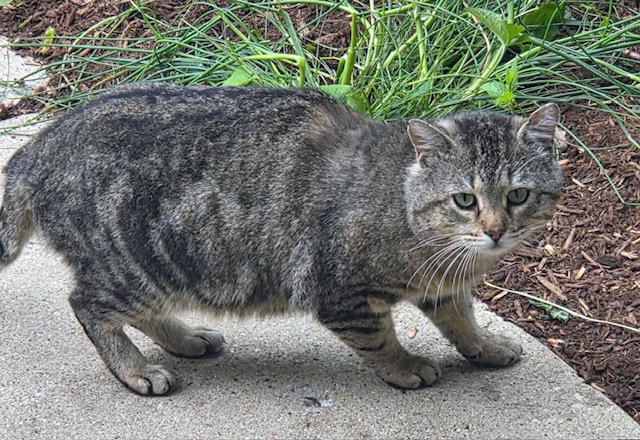
This is the cat that was neutered on 5/21 - definitely LOOKED pregnant, but no, a tubby tom at his Winter weight!

As Many As Possible As Soon As Possible

Happy Mother’s Day to All the Cat Moms!

Just What Have We Been Doing?

If you’ve been missing blog post updates, we’ve been soooo busy! If something is missing it is often because we just don’t have enough volunteers to do everything!

The face of volunteerism has changed. More than half of our volunteers are well over 50 years old. My history is different from what many people are experiencing these days. I started volunteering in my late twenties, no kids, full time job. Twenty years later, still no kids, “retired”, I’m President of Feral Fixers, learning so much on that journey and making connections all along the way.

We are all overworked – doing multiple tasks any given day, any given week. It would help so much to have more fosters, more trappers, TNR volunteers & CiT caregivers, transporters, cleaners of crates, traps and carriers. Each one of those needs? We have people who not only trap but also foster and transport. People who clean and maintain inventory at the building – keeping in-kind donations under control. People who coordinate other volunteers, trying to valiantly keep shifts covered but ultimately ending up covering those animal care duties themselves when volunteers cannot make it in to do their shift.

We are no different from most organizations in our area. What has changed is the ability of people to volunteer consistently and responsibly and there are many societal causes. But it is the strength of an individual that we need to contribute what is so very valuable to the goal of reducing cat overpopulation and euthanasia.

The offers of limited hours on specific days may not fit our needs, but perhaps those hours do not have to be at the building, maybe it takes another form – soliciting donations for fundraisers, creating and manning fundraisers, networking in municipalities to increase endorsement of TNR, just a few examples. Those things are already being done by people who are doing several other things, take a load off our shoulders for specific activities. Bear in mind that you cannot just walk in and take over a task – we need to get to know you and your abilities, be sure you are going to stick and we can rely on you. And sometimes you need to be a bit pushier – about one in 10 volunteers is a keeper, we get discouraged spending the time we don’t have on an investment that is not going to work out.

Trying not to be negative, just express how much we need so many more volunteers to continue doing what we do!

Chewy Donation
One donation we received thru Chewy - thank you to our donors who send from our Wish Lists!

208 Already So Far This Year!

We will be off the week of 5/21, resuming 5/28. Can’t wait to see how many we achieve this coming week!

  • 04/14 – DCAS – 1 male feral
  • 04/16 – DCAS – 2 males, 1 friendly, 1 feral, both with wounds on rump/tail.
  • 04/20 – DCAS – 2 male ferals.
  • 04/23 – DCAS – 3 friendly, 26 feral, 12 female, 17 male.
  • 04/30 – DCAS – 5 friendly, 18 feral, 7 female, 16 male.
  • 05/07 – DCAS – 6 friendly, 19 feral, 12 female, 13 male.

Our April total is 115, May total 25, 2026 total 208, 16,753 since 2007!

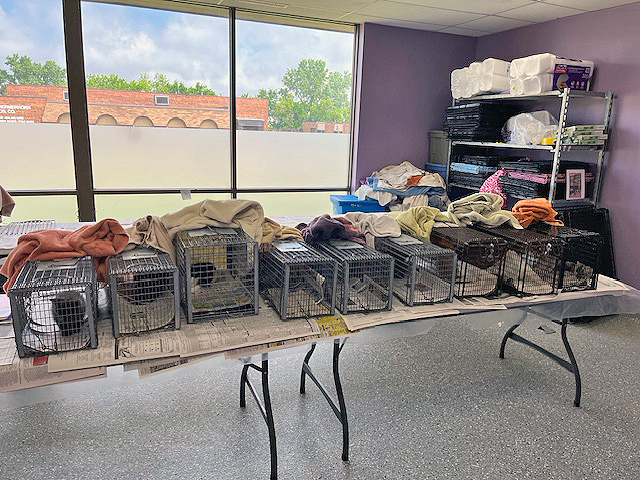
Getting ready for the 4/23 trip to DCAS...

As Many As Possible As Soon As Possible
From The President

2026 - Can You Believe it!

We’re almost thru 2025 as this is written. The year zoomed by!

Volunteers, caretakers, fosters, donors contributed to the spay/neuter of 811 feral and stray cats and kittens. Once again, we have done over 300 adoptions this year with the help of our trappers, fosters, adoption and animal care volunteers with just 10 days to go til the end of the year as I write this. We’ve helped so many cats and humans with the care of cats. Long-lasting effects in the future of cats in the DuPage County area.

Another year where there were limited spay/neuter services, pet owners and feral caretakers impacted by financial and housing issues. This has resulted in increased volume of cats outside and intact, creating more kittens. All shelters in the area are full, constantly.

We started trapping in February at locations with barns and outbuildings and accomplished 117 by the end of March – very early start. The whole year had its ups and downs with surgery and volunteer availability. But this contributed to a total of 16,545 spay/neuters since our start in 2007. Amazing, isn’t it?

Weather is the great unknown, but we hope to hit the ground running once again by the end of February, there are many locations that we need to get back to. Cats move around and just when we think we have resolved an area – a call with 20 more cats from a “finished” location comes in. Feral Fixers is at the top of all the search engines and perhaps someday we can expand our coverage to more than firm DuPage County response. That would take more trappers and more animal care support across the board. Please consider learning to trap and working in your own neighborhood, making a lasting difference! So many cards this year have mentioned how they are not seeing kittens as a result of our efforts.

Each week of trapping can result in kittens or cats that can become adoptable, requiring additional care at the building and then fostering and then adoption. Injured cats needing additional care are held at the building for recovery. Cats that must be relocated are usually held at the building until that can be arranged. This all requires an increased number of volunteers so that we can meet the need.

Our donors have made a huge difference, supporting us with the funds that keep the cats healthy, fed, warm in the Winter, cool in the summer. Imagine the food bill this past year! Skids of cat litter!

We always hope for fewer cats to be trapped, unlimited spay/neuter capacity and the day the phone will stop ringing with more and more cats to be cared for. Please help us make 2026 that year!

Donors, volunteers, caretakers have been doing so much for the past 18 years, and we’ve done so much – 16,545 cats!  Just remember –

As Many As Possible As Soon As Possible
It's 2025!

2025 – Already Here!

2024 has been a very long year, hasn’t it? Yet it seems to have been over in the blink of an eye!

The volunteers, donors, caretakers, fosters, all playing a part in Feral Fixers accomplishing 854 spay/neuters of feral and stray cats and kittens. We have adopted approximately 342 cats and kittens to wonderful homes with the help of our adoption, foster and animal care volunteers and there are two days left in the year as I write this. We have assisted many sick and injured cats. We’ve done so much that is positive and will have long-lasting effects for both cats and humans.

We have to mention the challenges of the year – spay/neuter clinics shut down for reconstruction or permanently, veterinarians leaving the work force, all reducing the number of available surgery slots we could obtain. Pet owners faced housing and financial issues, resulting in more cats being outside and intact. Every shelter is full – we keep saying that and it does not improve.

Judging by the number of phone calls we have received and the locations we just could not get to, 2025 may be an even busier year. We resume trapping when the overnight temperatures are above 30 degrees consistently – that date is anyone’s guess in Chicagoland these days. We have to take the situations on a case- by-case basis. More people are bringing cats into their homes and arranging s/n themselves and we applaud them!

Through it all, our donors have helped so much. While fundraising takes time and there has not been near enough of that this year, we have been able to keep the lights on, the cats fed, the litter boxes scooped and spay/neuter to the capacity of the surgeries available to us.

We are hoping that increased capacity for surgery will increase our yearly s/n numbers in 2025 – the only way we are going to get ahead. We are hoping that more people will be able to volunteer, foster and adopt!

Even though this is hard work, we have to remember the impact we have had, how many cats would be roaming the streets, producing more and more, the suffering that has been alleviated, feline and human alike! We have much more work to do but what a difference has been made so far!

You - donors, volunteers, caretakers, are all responsible for the huge difference Feral Fixers has achieved in the last 17 years! Remember –

As Many As Possible

As Soon As Possible
It's 2024, finally...

2023 – What A Year

Together, volunteers, donors, caretakers, everyone involved with Feral Fixers, we have accomplished 926 spay/neuters of feral and stray cats and kittens. With the help of our dedicated adoption and foster and animal care volunteers, we have found homes for 360 cats and kittens. In just this year, you can see the impact as we reduced the volume of cats outdoors, we reduced the overpopulation crisis from every direction, helping felines and humans alike.

The challenges have been immense. 

Kitten numbers have increased dramatically –societal changes may be the biggest impact: lack of vet access, money, movement of our population – combining households, isolation and hoarding, etc. People are actually paying more attention to the cats outside and are discovering the pregnant cat, the litter of kittens much more readily than in the past which results in overall increased volume that we are contacted about. Every shelter is full. Everyone is doing their best to save every cat they can. Adults and kittens are becoming friendly at an increased pace. Years ago, a feral was a feral was a feral. Not anymore. Kittens sometimes are friendly from the time they are trapped, adults will have a complete turnaround to being friendly. National organizations are seeing this and the only advice they can offer is that even if a cat is friendly, put it back outside – there just aren’t enough homes.

Volunteers. The data can be looked at in many different ways, but finding information that DuPage County ranked 2nd in 102 Illinois Counties of charities per square mile illustrates why it is so difficult finding and maintaining volunteers. No one seems to have as much time as we used to. There are so many choices of where to spend that valuable volunteer time. Our lives can change in an instant and our personal responsibilities must take priority. Feral Fixers has wonderful volunteers, and we treasure them every day. We need more, the volunteer staff is not a constant and can change quickly. From trapping to transport, fostering and shifts of cat care at the building, cleaning – oh my, the cleaning! We do need volunteers who can snuggle kittens just as much as we need those who can sweep floors and do laundry. Social people who can interact with adopters on adoption days, help with events, host events! Everyone has their own strengths and abilities, please share them with us!

Need everywhere. We can average five calls a day for help.

*Discovered kittens under the shed, come help. *My mother let a pregnant cat into her house, come trap and take the kittens. *My cat has lost its mind and is attacking me, help. *I have 15 cats in and around my house (usually results in 60+ cats). *I live outside your area, but I can bring the cats to you. *Been feeding a cat for 2 years, not neutered, now he’s injured from fighting, come help. On social media, you may often see “call Feral Fixers, they will help you” and we do help so many!

With all these challenges we must remember the impact we have had, can you imagine how many cats would be roaming the streets, producing more and more, the suffering we have alleviated, feline and human alike! We have much more work to do but what a difference has been accomplished! 

You - donors, volunteers, caretakers, are all responsible for the huge difference Feral Fixers has achieved in the last 16+ years!

November Updates

In October’s newsletter, I alluded to the changes we have gone thru, how much greater the need for TNR is than I ever imagined before Feral Fixers came about. This month I would like to tell you more about what’s happening with us.

I am writing this a little early, before October is over, actually, but we have made our final trip for October into PAWS and our final numbers are: 124 cats for the month, 731 for the year and 1,342 since we began. Perhaps we repeat the statistics too often, but we know that if we had no idea of the volume of cats, no one else did either and we need to impress on everyone the enormity of the task still ahead of us.

The economy has given us a new challenge – PAWS Lurie Family Spay Neuter Clinic has been forced to increase its rates for ferals. It is only $5 more per cat, but when neutering hundreds of cats, it has a definite impact. So far, we have asked people to donate $30 per cat to cover our costs, we will soon have to ask for $35 in order to keep doing what we do and remain solvent.

Often, being able to donate to cover the cost of getting their cats fixed is a point of pride with caretakers. I have run into several that won’t take “charity.” And the cats remain unneutered, producing kittens and sometimes the colony is unhealthy. Even when I have said not to worry about the money right now, the most important thing is the cats, they won’t budge. In one of these situations, the colony did become very ill, some of the cats still have a very bare coat and now that the caretaker has agreed to TNR, it came a little too late and another litter has been born. But, we have TNR’d 14 cats at that location with only 3 more adults to go. This process is an education for everyone involved. When you start out to trap and neuter cats, little do you realize how much interaction must take place with people in order to do this. TNR and feral cats are often very emotional issues, our volunteers are becoming very adept at handling some tough situations. The knowledge of just how much you can or should do to help a person is developed with practice, and we can’t seem to help the cats without helping the people too! So far we have been able to obtain donated food that we give to caretakers who are barely scraping by. It feels wonderful to be able to hand them 3 big bags of dry food and know that they can feed their cats for at least a month without having to buy any. We do wish we had access to more canned food, but that shows up every once in awhile, too. Like everything else, cat food has become very expensive.

One of the reasons that we microchip is so that when cats are picked up or “found” we know where the cats should go back to. One of the really great benefits has been that three of the cats that we have micro-chipped have gone and found themselves homes. We get a call from a vet, asking if we know the cat that belongs to a particular microchip number, of course we ask why and find out that they have clients that have taken this particular cat in. Or the person on the other end of the phone says, “I have your cat.” Sorry, you will have to be more specific than that, there are 1,300+ of them out there! The new families worry that we will want to take back these cats that they have fallen in love with. What would we do with them? The cats have chosen these people, the people have very responsibly taken the cats to the vet to have them checked out and have then contacted us. Who could ask for more? The cats know. And the people are so happy to learn that the cats have been vaccinated and neutered! We do warn caretakers that once the hormones have dissipated, the cats could become very friendly. No caretaker could possibly object to learning that their feral has a home, it’s what we all want for the cats, for all of them to have homes and stay inside. But until the cats agree, the outside life it will be.

Due to the lack of fosters and adoptive homes, Feral Fixers has TNR’d a lot of 3- and 4-month old kittens this fall. Taming a kitten that age can take months indoors. It will be interesting to see how many make the decision on their own and go forth and find themselves homes. I would be happy if I was kept busy tracking down micro chip numbers and changing our database to reflect their new location. Currently, most humane societies are experiencing a big drop in adoptions, resulting in the cats staying in the shelters longer and longer before finding a home. With so many ferals turning to the friendly side, the competition for homes will be even greater. As they say, things may get worse before they get better, but hopefully next year there will be a lot fewer kittens born, resulting in more adoptions from shelters.

There is another Jewel Shop & Share this month, please print the coupons and pass them out to your friends and co-workers. This is as close to “free” money as we can get!

A huge THANK YOU! to everyone who has donated and passed on the information about our ChipIn campaign to raise funds for traps. As I write this, we have received many donations in the form of checks that were not processed on the website, so we have surpassed our goal! We will be placing an order soon – I’m sure there will be pictures when we get our shipment! What a great way to recognize National Feral Cat Day!

We have all been working so hard to fulfill our goals this year and have done an amazing amount of work. There is more to doing TNR than processing cats, though and we need time to do all those other tasks. We are announcing that we will be taking December 15th to February 1st off from doing trapping and transporting. We will be doing our best to stick to that resolution, please help us with that. We need a break!

Please put Frosty Claws on your calendar for January 17th (one of the things we will be working on) and come tell us about your cats and learn how many wonderful people care for feral cats!

As always, thank you so much for your support, we could not do it without you!